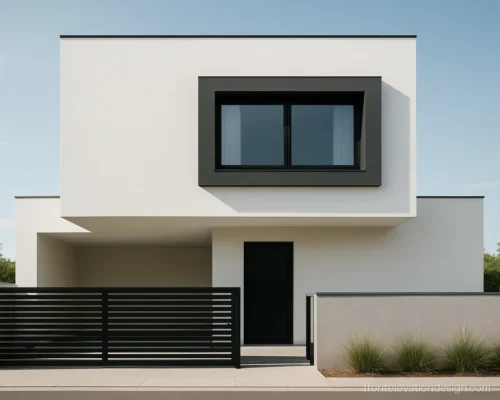
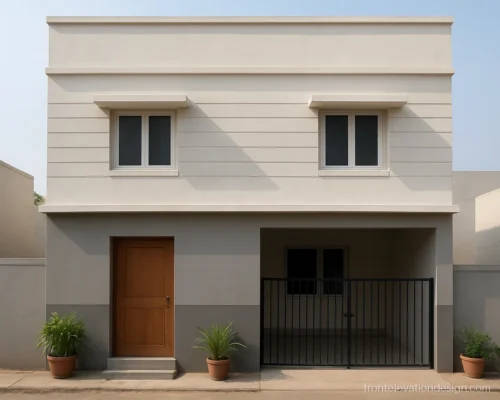
Front Elevation Colour Combination Ideas for Indian Homes
12 elevations Materials and colour Updated October 2026
A good front elevation colour combination makes a plain house look finished and keeps it looking clean for years. This front elevation colour design gallery shows two colour pairs, grey and white fronts, earthy tones, bold accents and texture paint, with notes on finish and upkeep.
Keep the front elevation colour simple: one base, one accent and maybe one texture. More colours cost more in labour and touch-ups. If you also plan cladding, see our front elevation tiles design page so the paint and tiles match.
Two Colour Combination for Front Elevation
Most good fronts use one calm base colour and one stronger colour for frames or bands. This is the safest front elevation paint colour combination for a first-time builder.
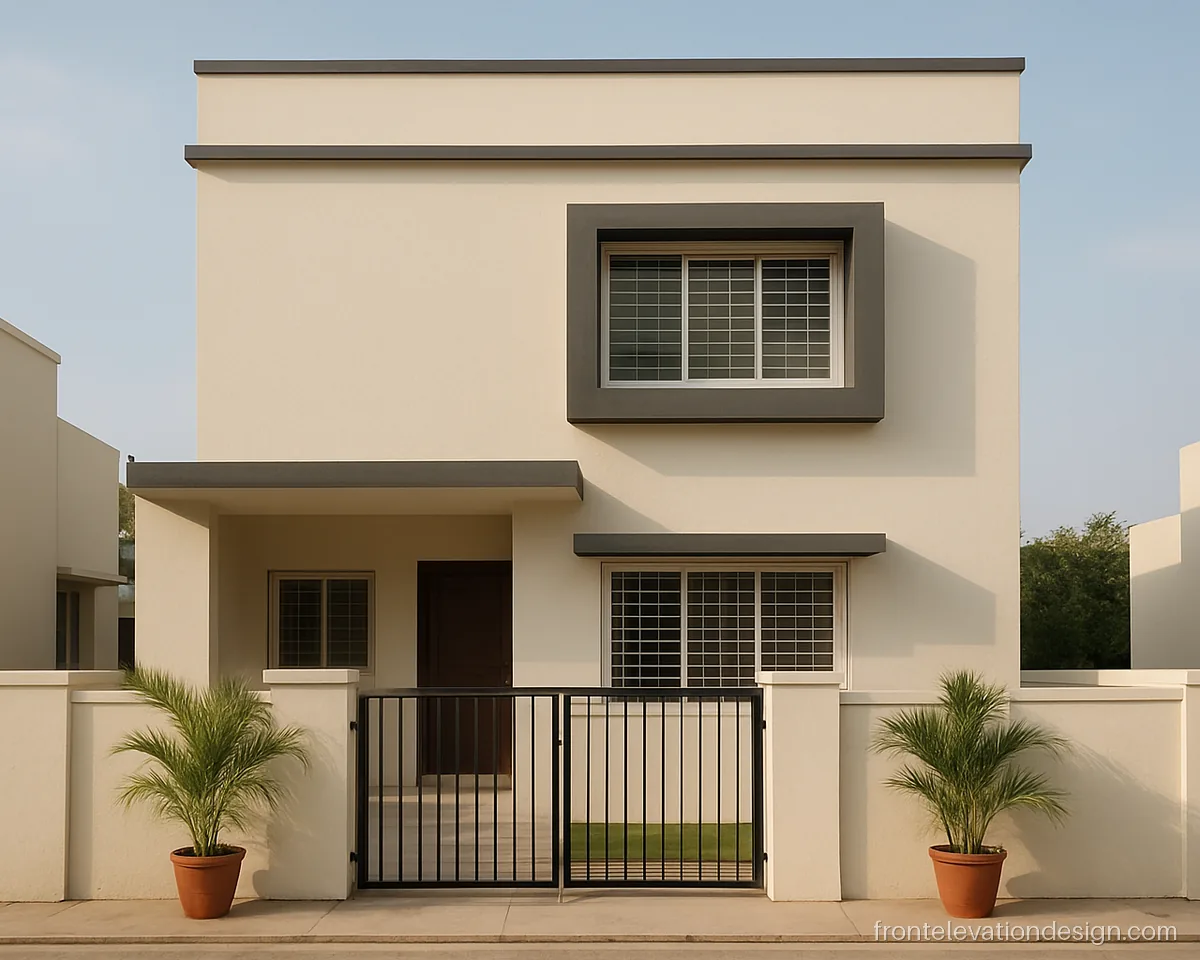
- Plot 30 x 40 ft
- Floors G+1
- Materials Exterior emulsion
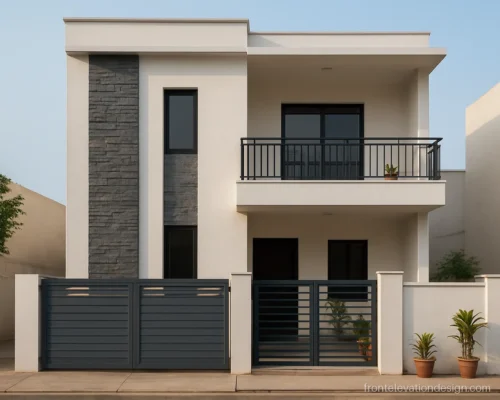
Ivory walls with a charcoal frame on the bedroom window give a clean two-tone look. It suits a 30 ft wide G+1 house that wants a sharp but quiet front.
Architect's note: Ask for a drip groove under the charcoal frame top so rain does not streak the ivory wall below.
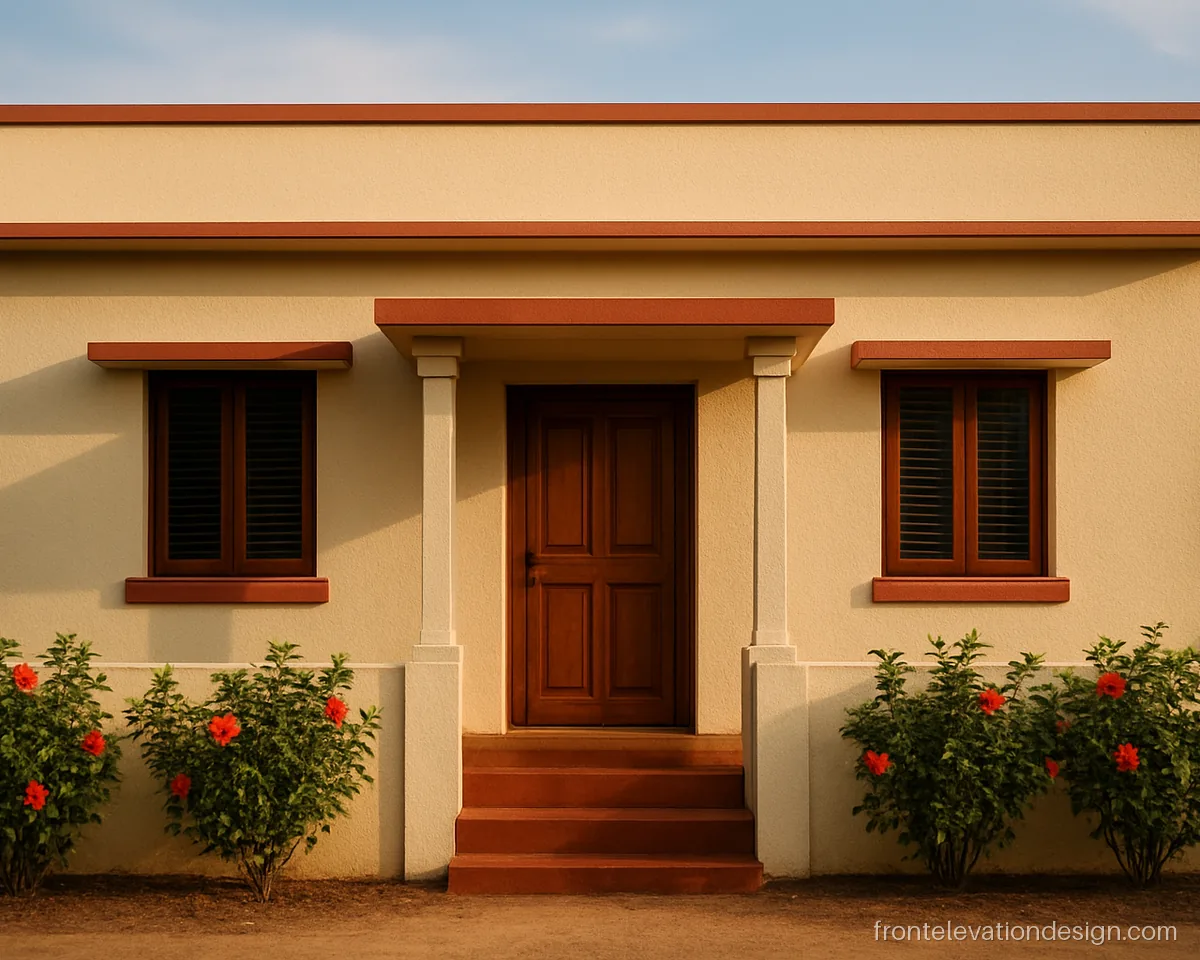
- Plot 30 x 50 ft
- Floors Ground floor
- Materials Emulsion, red band
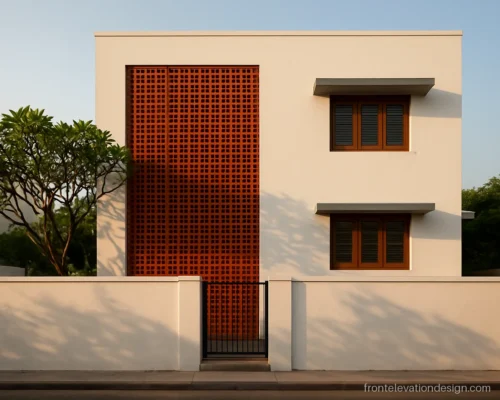
Cream walls with terracotta red bands on the chhajja and porch beam feel warm and Indian. Good for a wide single floor home in a hot town.
Architect's note: Paint the chhajja top surface with a waterproof coat before the colour band so water does not seep in.
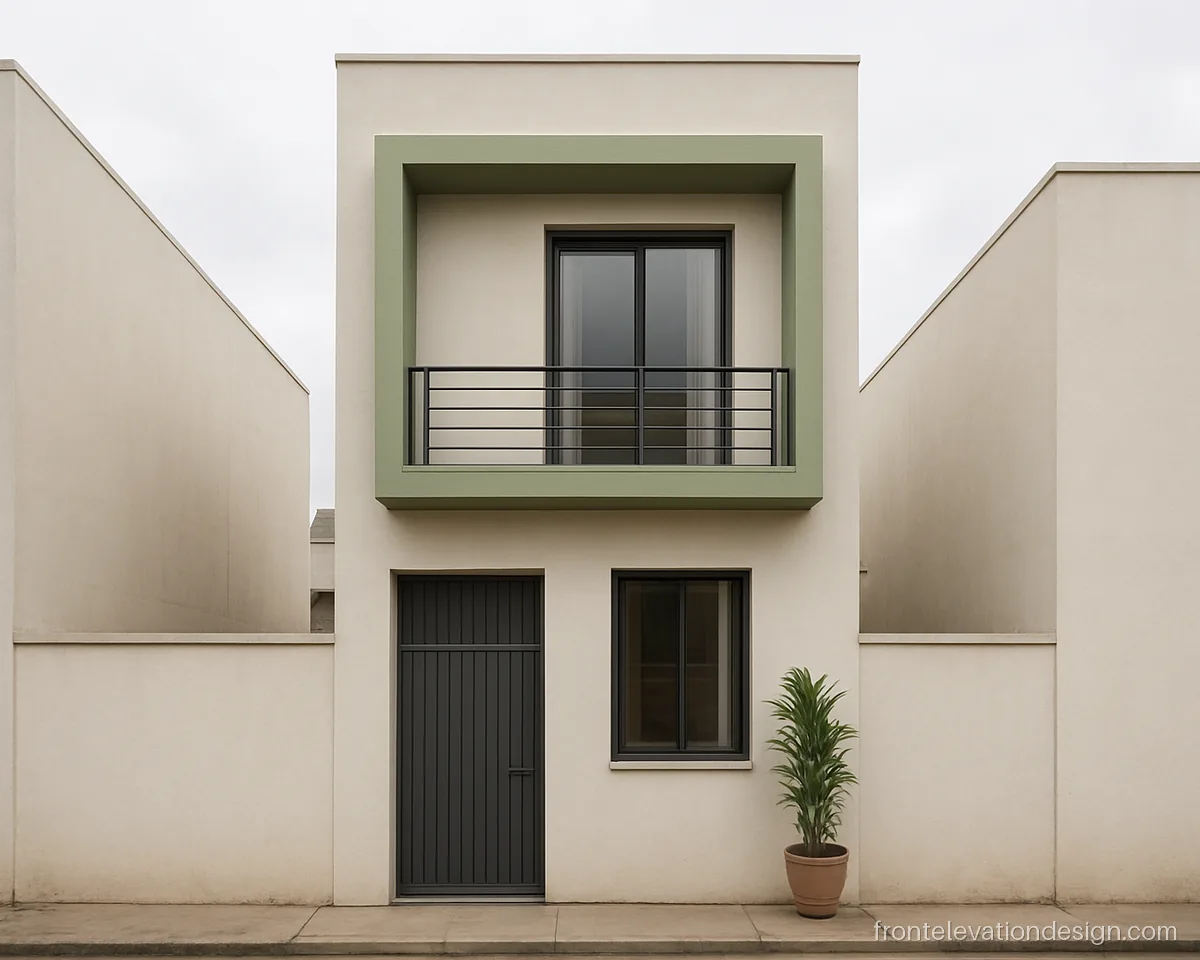
- Plot 20 x 40 ft
- Floors G+2
- Materials Emulsion, sage green
A sage green front box on off-white walls makes a narrow 20 ft front look tall and fresh. The soft green hides dust better than pure white.
Architect's note: Keep the green box edge 4 inches proud of the wall so the colour break follows a real line.
Grey and White Front Elevation Colour Combination
Grey and white front elevation designs stay in demand because they look neat and hide rain marks. Use light grey for walls and dark grey only for frames, bands and the parapet edge.
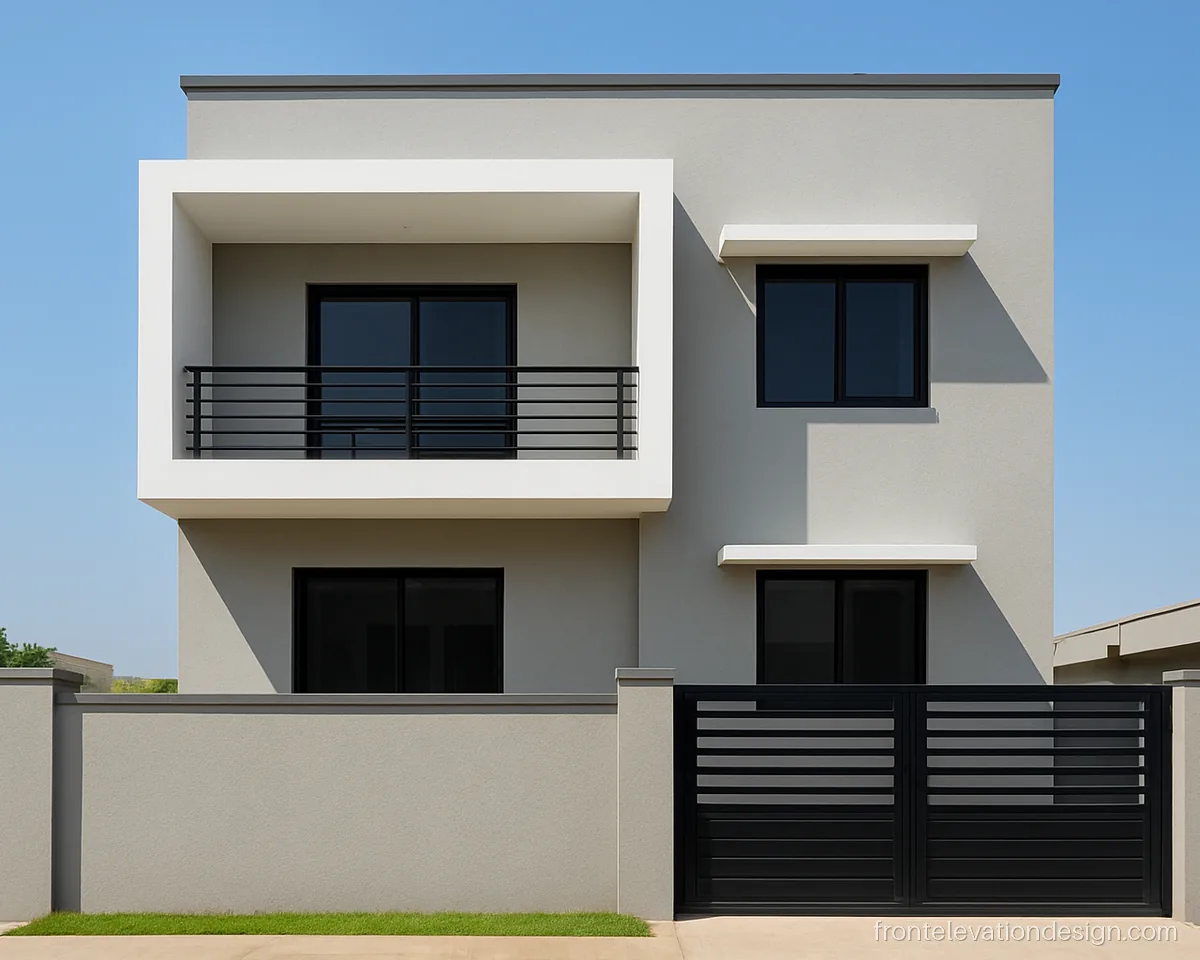
- Plot 25 x 50 ft
- Floors G+1
- Materials Exterior emulsion
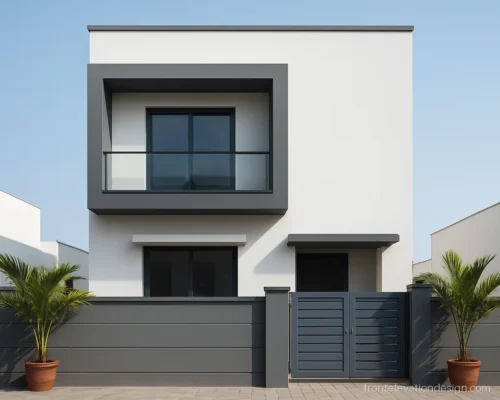
Light grey walls, a white box frame and a dark grey parapet give three shades of one family. It is easy to repaint in parts later.
Architect's note: Fix the exact shade numbers in writing so the painter mixes the same grey for both floors.
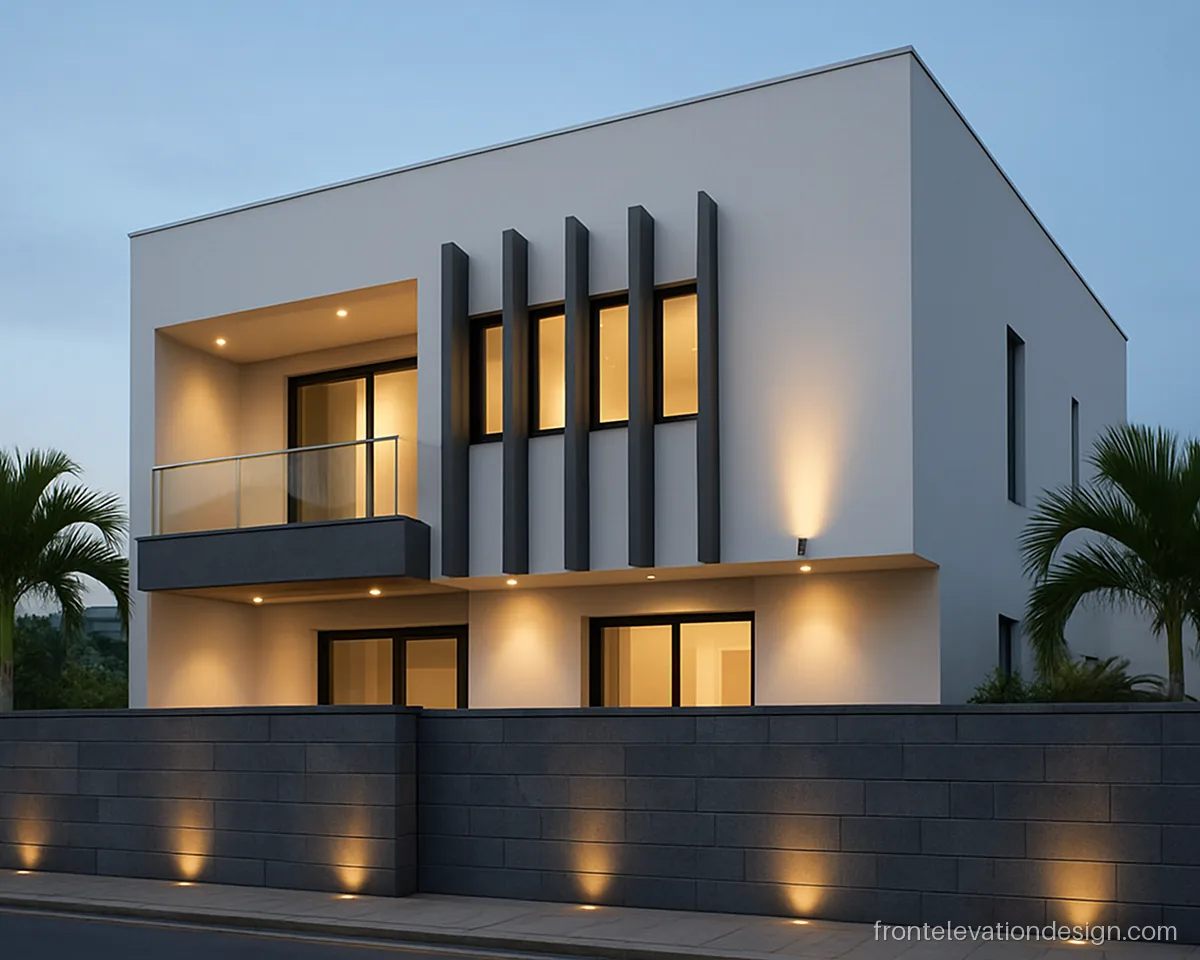
- Plot 30 x 60 ft
- Floors G+2
- Materials Emulsion, fins
Slate grey vertical fins on a white body add depth and shade to the windows. Evening lights make the fins read clearly from the road.
Architect's note: Fins over 6 inches deep need reinforcement from the slab; ask the engineer before casting.
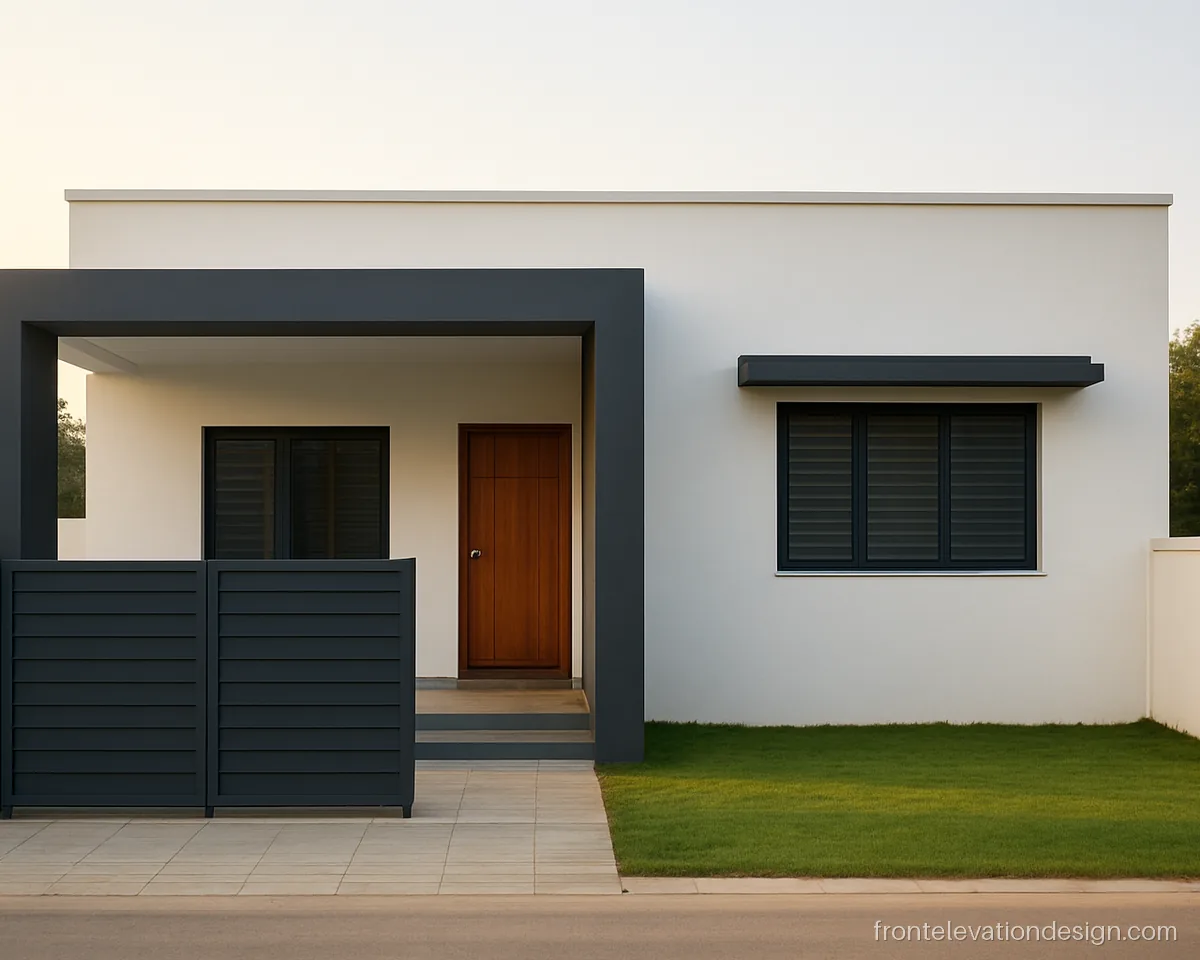
- Plot 40 x 60 ft
- Floors Ground floor
- Materials Paint, wood finish
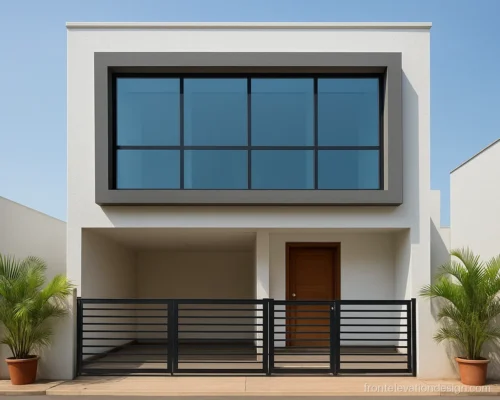
A white single floor front with a grey porch frame and a thin wood finish strip looks modern without much spend. It suits a wide plot with a deep porch.
Architect's note: Seal the wood finish strip with an outdoor clear coat and keep it under the porch slab.
Earthy and Bold Front Elevation Colours
Earthy colours like ochre, beige and brick red suit Indian sun and dust. A single bold accent, such as teal or deep blue, works best on one small part of the front.
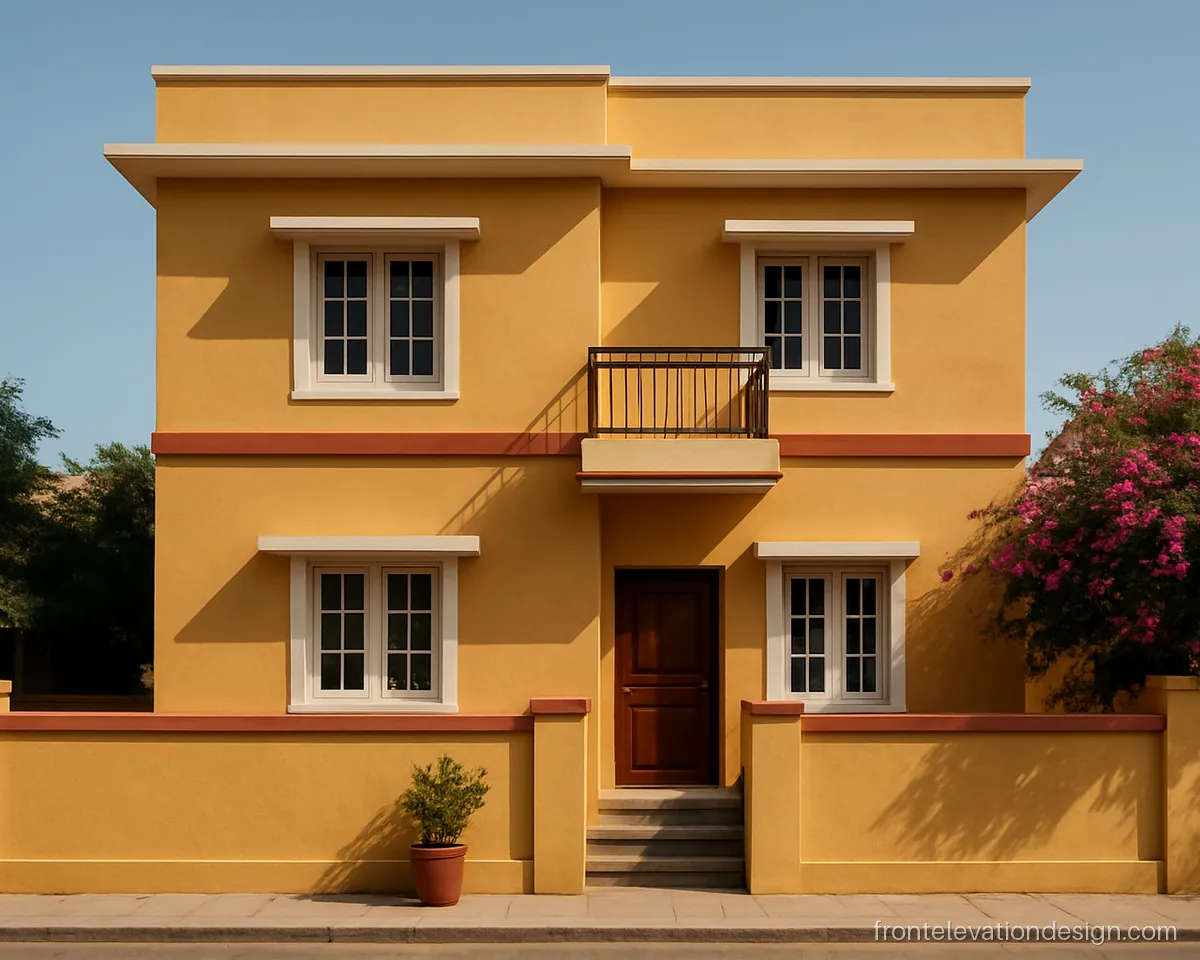
- Plot 30 x 40 ft
- Floors G+1
- Materials Emulsion, three tones
Ochre walls, brick red bands and white trims give a front elevation colour combination Indian style families like. It fits towns where dust settles quickly.
Architect's note: Ask the painter to finish the white trims last, with masking tape, so the edges stay sharp.
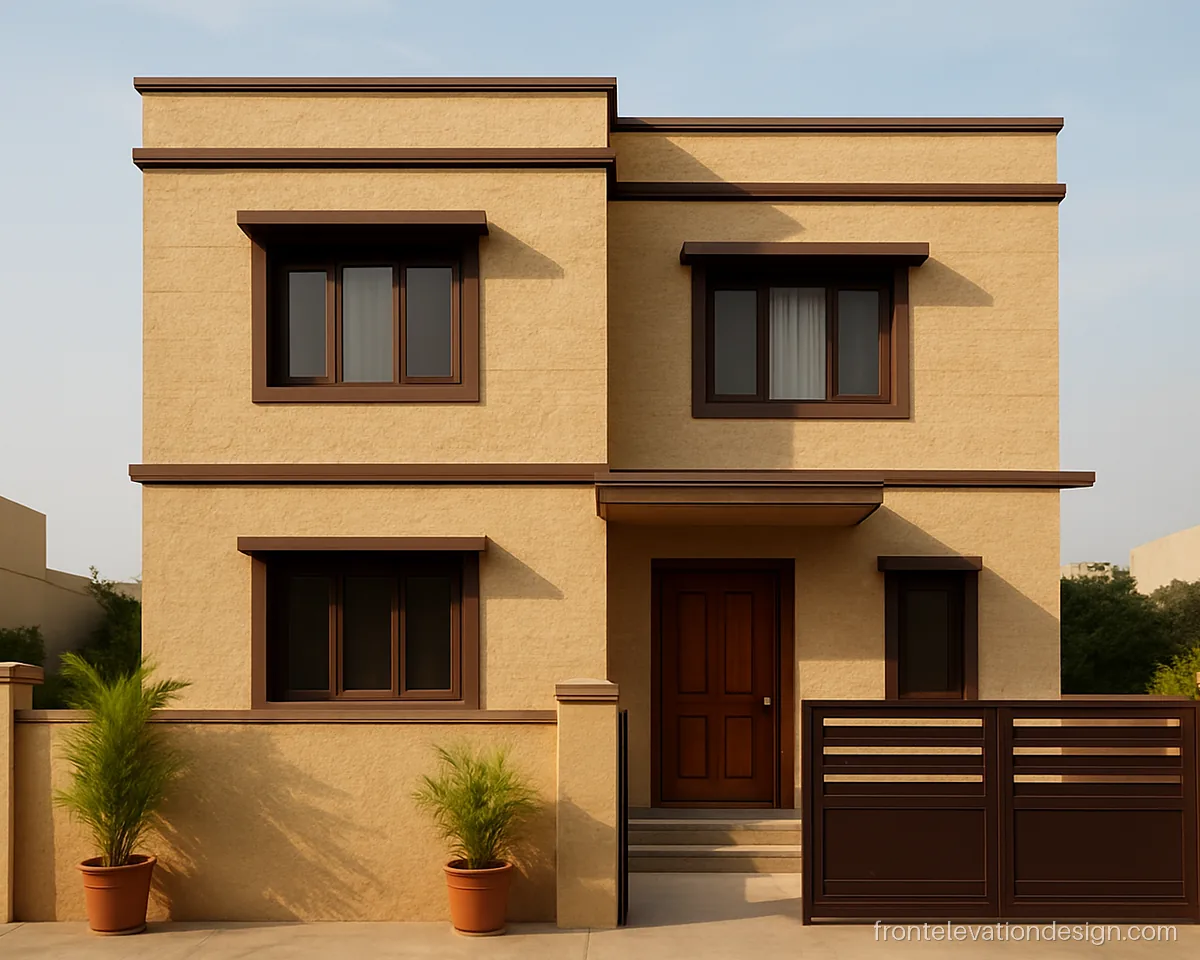
- Plot 30 x 50 ft
- Floors G+1
- Materials Texture paint
A beige sandstone texture with chocolate brown frames looks rich and calm. Earth tones age well and do not show dust like white does.
Architect's note: Texture paint needs a crack-free plaster and primer; fill cracks with a flexible filler first.
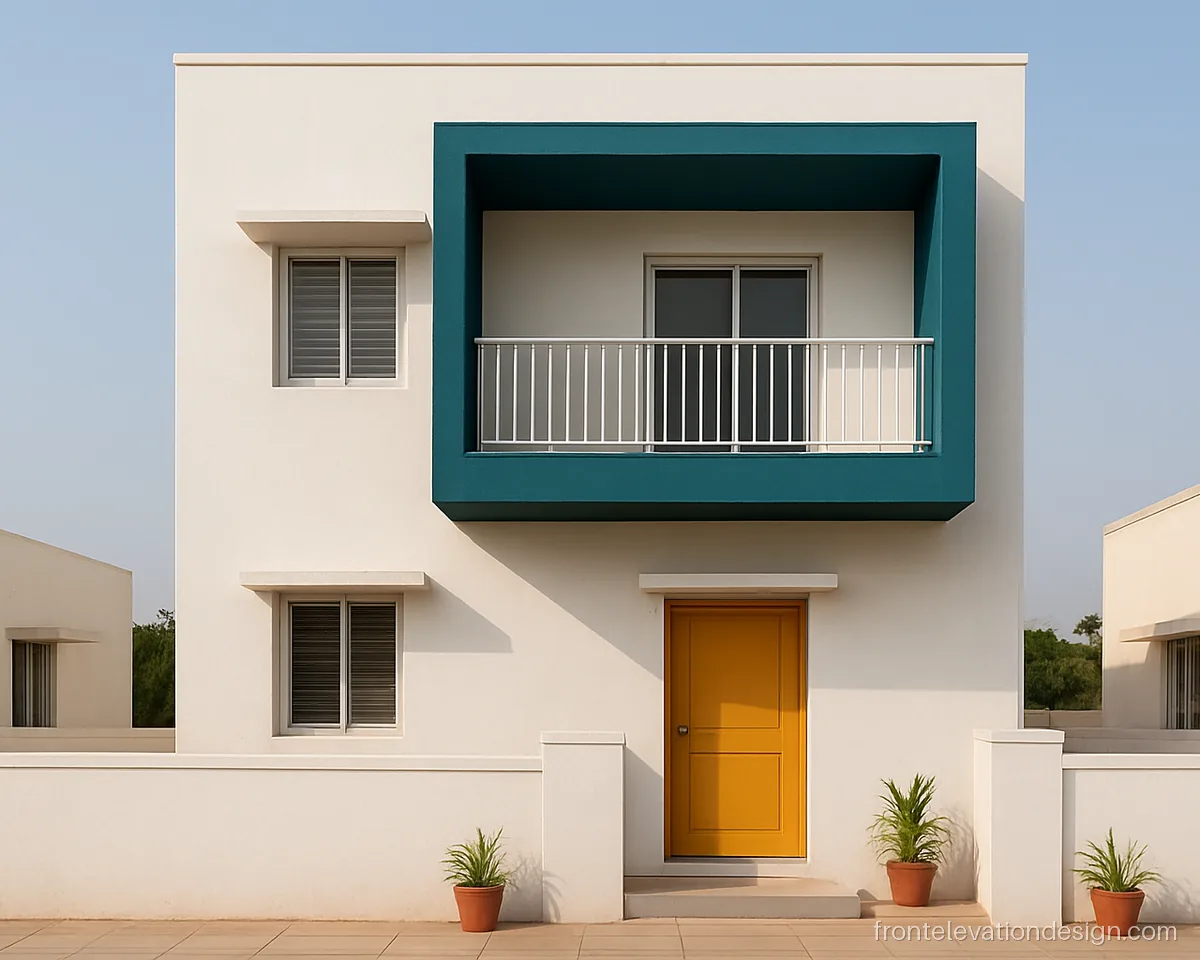
- Plot 20 x 30 ft
- Floors G+1
- Materials Emulsion, teal accent
One teal accent box on a white front is bold but not loud. Keep the rest plain so the accent stays the focus.
Architect's note: Dark accent colours fade faster in sun; ask for a UV resistant exterior emulsion for the teal.
Front Elevation Texture Design and Putty Finishes
A front elevation wall texture design adds grip and shadow to a plain wall. Use it on one box or band, and keep the rest smooth so cleaning stays easy.
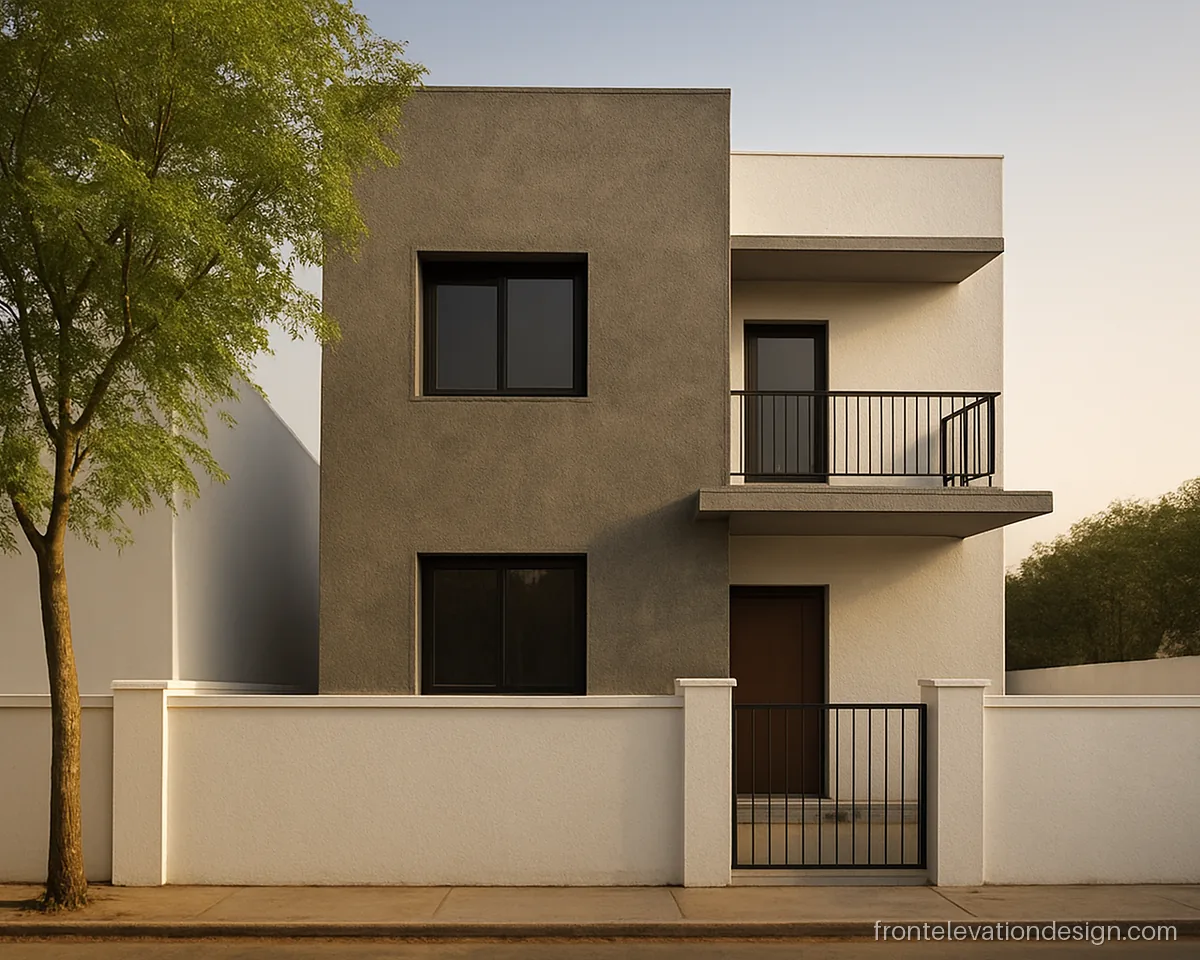
- Plot 30 x 40 ft
- Floors G+1
- Materials Rustic texture, paint
Rustic texture design for front elevation on one warm grey box gives depth without extra cladding. The smooth white walls around it stay easy to wash.
Architect's note: Apply texture only after the plaster cures fully, around four weeks, or it may crack.
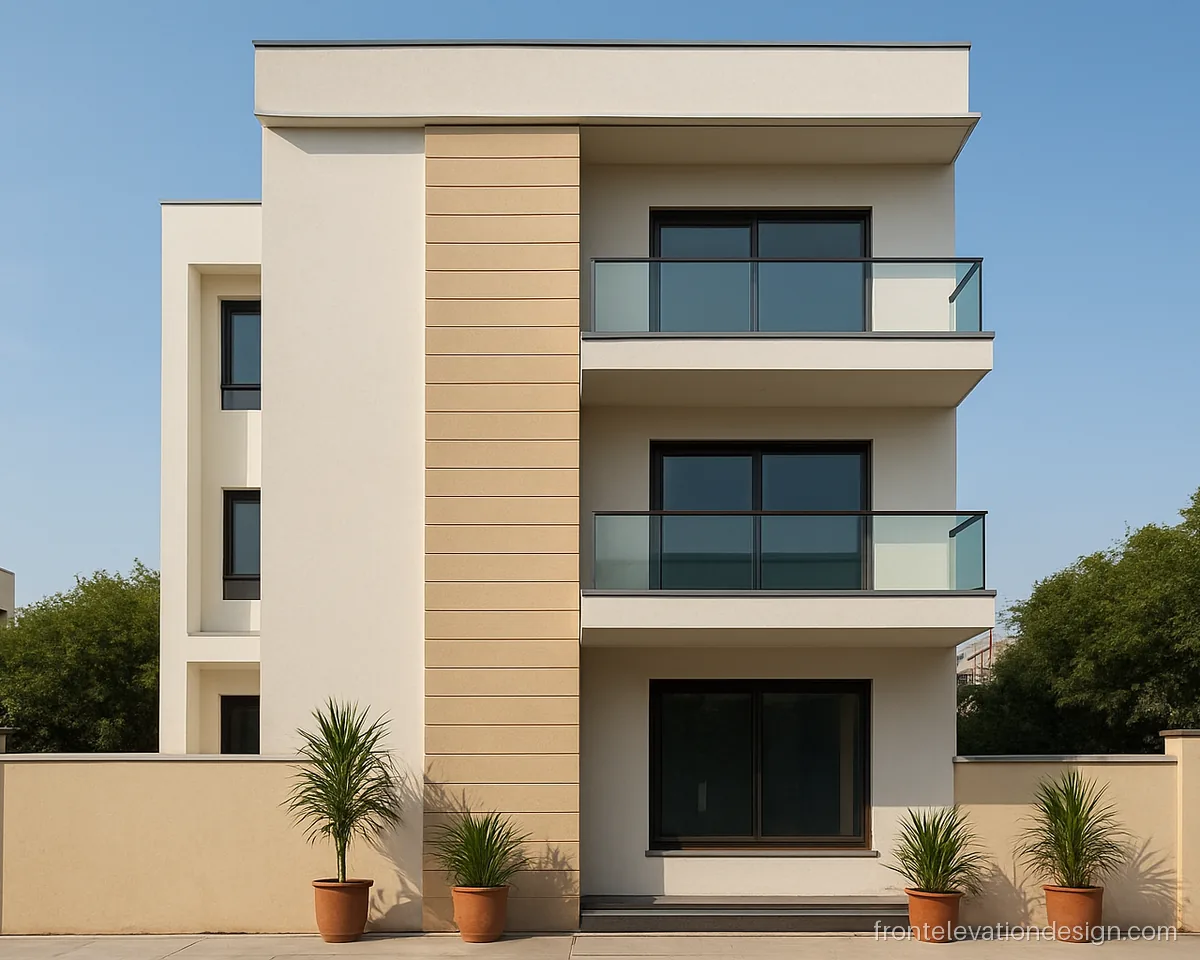
- Plot 25 x 50 ft
- Floors G+2
- Materials Putty grooves, paint
This front elevation modern wall putty texture design uses straight groove lines on a beige band. The lines hide joint cracks and catch shadow well.
Architect's note: Cut grooves in the plaster, not the putty, so they last; keep spacing even at 12 inches.
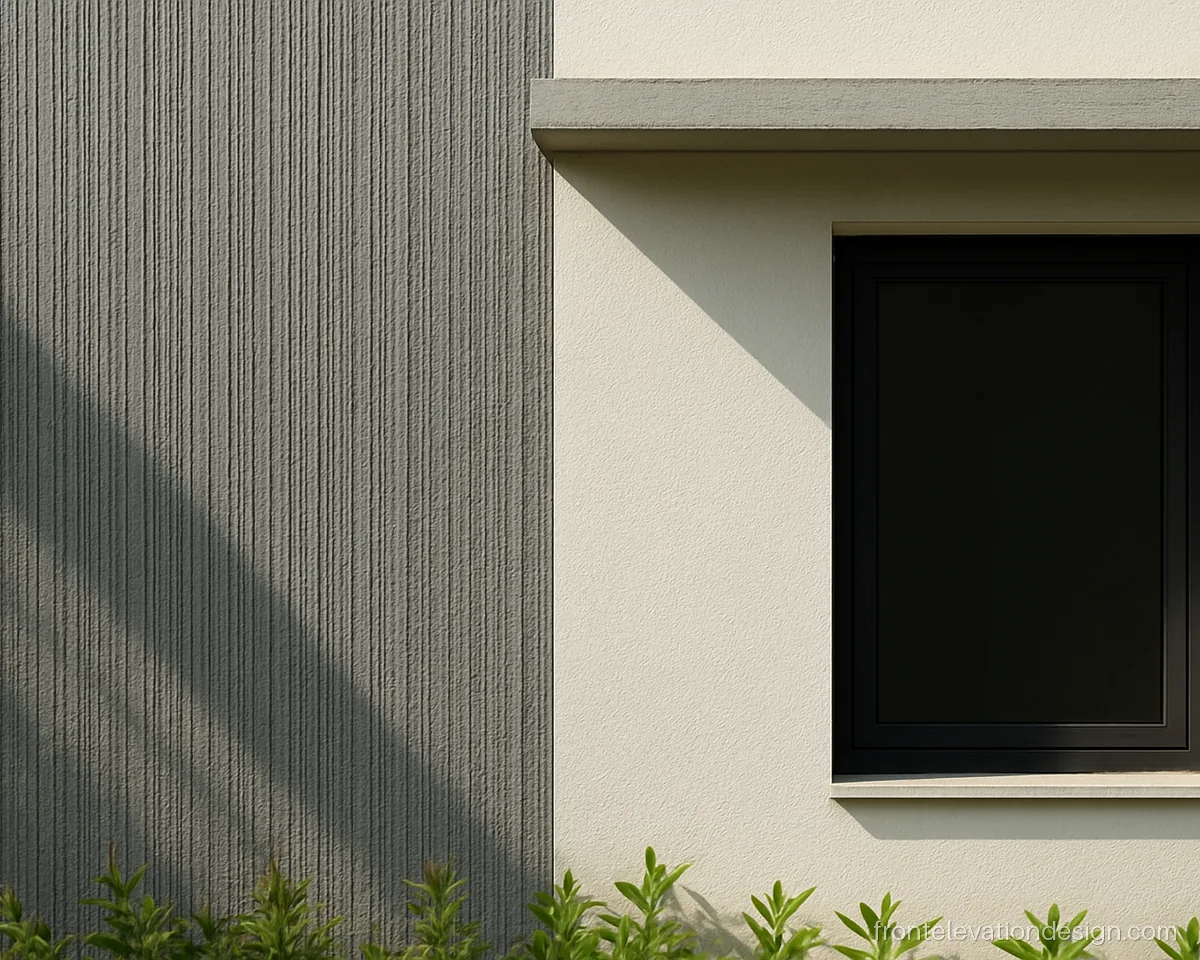
- Plot Any plot
- Floors Detail
- Materials Texture paint
A close-up shows how combed texture paint in stone grey meets a smooth white wall. Texture design for front elevation looks best with a clean groove at the joint.
Architect's note: Ask for a 10 mm groove at every texture edge so the finish line stays straight.
How to Choose Front Elevation Paint Colours
Start with the plot and the sun. A west or south facing front gets strong sun, so dark colours fade faster there. Light shades also keep the wall cooler.
- Narrow plots (15 to 20 ft): use a vertical accent band to make the front look taller.
- Wide plots (30 to 40 ft): use horizontal bands at sill or parapet level.
- Dusty roads: beige, grey and ochre hide dust better than white.
- Budget: plain exterior emulsion costs least. Texture, groove work and many colour breaks add labour.
Paint test patches of 2 x 2 ft on the actual wall and look at them in morning and evening light before you buy all the paint. For other cost-saving fronts, see simple low cost front elevation ideas.
Paint and Texture Finishes Compared
| Finish | Look | Upkeep | Best use |
|---|---|---|---|
| Smooth exterior emulsion | Clean, flat | Easy to wash, repaint every few years | Main walls |
| Texture paint | Grainy, shadowed | Holds dust in deep patterns | One box or band |
| Putty groove lines | Lined, modern | Grooves need clean edges | Vertical bands |
| Rustic trowel finish | Rough, natural | Hard to touch up evenly | Feature walls |
Paint works well with glass and metal too. If your front has big windows, check the front elevation glass design page, and for panel fronts see ACP and WPC elevation ideas.
What to Tell Your Painter and Keep It Clean
Give the painter a marked photo or drawing showing which wall gets which shade. Ask for one coat of exterior primer, two coats of emulsion, and waterproof coating on parapet tops and chhajja surfaces. Check that drip grooves under chhajjas are clear, since rain streaks usually start there.
Wash the front with plain water once or twice a year. Touch up dark accents first, because they fade before light colours.
Front elevation questions
What is the best colour combination for front elevation?
There is no single best one, but a light base with a darker accent works on most homes. Grey and white, cream and brown, and white with one bold accent are safe picks. Choose shades that hide dust if your road is busy.
Which front elevation paint colours last longest in Indian sun?
Light and mid tones like off-white, beige, light grey and ochre fade slowly. Deep reds, blues and teal fade faster on a west face. Use a good UV resistant exterior emulsion for any dark accent.
Is a two colour combination for front elevation enough?
Yes, for most houses two colours look neater than four. Use the second colour on frames, bands or the parapet. You can add a texture in the base colour for depth.
What is the latest texture design for front elevation?
Right now, putty groove lines, fine sand textures and soft rustic trowel finishes are common. They are used on one box or band rather than the whole front. Simple patterns are also easier to repair.
How often should the house front elevation colour be redone?
A smooth exterior emulsion usually needs a fresh coat every five to seven years, depending on rain and sun. Texture lasts longer but collects dust. Washing the front yearly helps it last.
Does vastu decide front elevation colours?
Some families follow vastu traditions when picking colours, and that is a personal choice. From a building point of view, light shades keep walls cooler and hide dust better. Pick what you like living with.